Sri Madhwacharyaru
1199–1277 CE
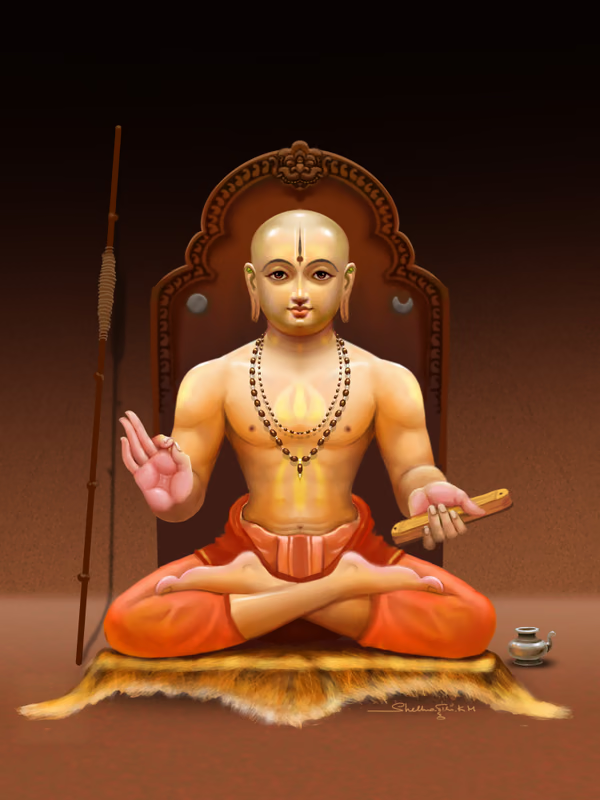
Sri Madhwacharyaru is the revered founder of the Dvaita (Tatvavada) philosophy and the root authority of the Shiroor Matha lineage. As the third avatar of Lord Vayu, he consecrated Lord Sri Balakrishna in Udupi, established the Ashta Mathas, and initiated Sri Vamana Teertharu into sanyasa, bestowing the sacred idol of Sri Vittala Devaru (Anna Vittala).
- Parampara Position: Founder (Moola Guru)
- Time Period: 1199–1277 CE
- Shalivahana Shaka: 1199
- Samvatsara: Pingala
- Aradhana: Magha Shukla Navami (Sri Madhwa Navami)
- Vrindavana Kshetra: Uttara Badari (Badari Kshetra)
Incarnation and Mission
Sri Madhwacharyaru is worshipped as the third incarnation of Lord Mukhyaprana (Vayu Deva), appearing after Hanuman and Bhima to re-establish the eternal philosophy of Tatvavada (Pure Dualism). Born in Pajaka Kshetra near Udupi, he authored 37 monumental works collectively known as the Sarvamoola Granthas, illuminating the supremacy of Lord Sri Hari (Vishnu Sarvottamatva) and the inherent reality of the world (Jagat Satyatva).
Establishment of Udupi Ashta Mathas
Acharya Madhwa consecrated the divine vigraha of Lord Sri Balakrishna—originally sculpted by Vishwakarma and worshipped by Rukmini Devi in Dvaraka—in Udupi. To maintain uninterrupted and perpetual worship of Lord Krishna, he initiated eight bala brahmacharis into sanyasa, thereby establishing the celebrated Ashta Mathas of Udupi.
Root of Sri Shiroor Matha
Acharya Madhwa initiated Sri Vamana Teertharu as the first pontiff of the Shiroor Matha lineage, bestowing upon him the sacred and ancient idol of Sri Vittala Devaru (fondly worshipped as Anna Vittala). According to the Shiroor Matha chronicle, Sri Madhwacharyaru concluded his visible earthly mission and departed for Uttara Badari on Magha Shukla Navami in the Pingala samvatsara (Shalivahana Shaka 1199 / 1277 CE).
ಪರಂಪರಾ ಶ್ಲೋಕ (Guru Parampara Stotra)
ನಮಸ್ತೇ ಪ್ರಾಣೇಶ ಪ್ರಣತ ವಿಭವಾಯಾವನಿಮಗಾ ನಮಃ ಸ್ವಾಮಿನ್ ರಾಮ-ಪ್ರಿಯತಮ ಹನೂಮನ್ ಗುರು-ಗುಣ | ನಮಸ್ತುಭ್ಯಂ ಭೀಮ ಪ್ರಬಲ-ತಮ ಕೃಷ್ಣಷ್ಟ ಭಗವನ್ ನಮಃ ಶ್ರೀಮನ್ ಮಧ್ವ ಪ್ರದಿಶ ಸುದೃಶಂ ನೋ ಜಯಜಯ ||